List: $14.99
| Sale: $10.50
Club: $7.49
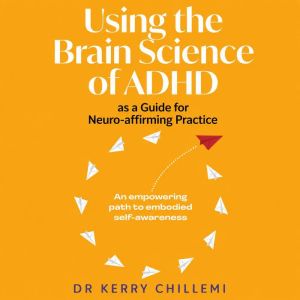
Using the Brain Science of ADHD as a Guide for Neuro-affirming Practice
Author: Dr Kerry Chillemi
Narrator: AI Voice
Unabridged: 2 hr 35 min
Format: Digital Audiobook Download
Publisher: Australian Academic Press
Published: 05/21/2026
Categories: Nonfiction, Psychology, Mental Health
Synopsis
This audiobook is narrated by an AI Voice.
Supporting neurodivergent adults and children to navigate the world requires mental health practitioners to use a neuro-affirming and neurobiological approach to therapy. Most adult ADHD clients report having spent years navigating the mental health care system with little success due to treatment methods that are not designed to meet the cognitive needs of neurodivergent minds.
In this unique book, clinical psychologist Dr Kerry Chillemi, neurodivergent herself, explores the brain science of ADHD as a guide for neuro-affirming practice. Her approach uses embodied self-awareness to minimise the roadblocks that can prevent neurodivergent people from achieving their best lives. She makes liberal use of real-life client vignettes throughout that vividly illustrate concepts and enrich the reader’s appreciation and understanding of the neurodivergent mind. The many sincere voices of ADHDers lend considerable weight to the effectiveness of this guide in how best to achieve a neuro-affirming approach with clients.
Supporting neurodivergent adults and children to navigate the world requires mental health practitioners to use a neuro-affirming and neurobiological approach to therapy. Most adult ADHD clients report having spent years navigating the mental health care system with little success due to treatment methods that are not designed to meet the cognitive needs of neurodivergent minds.
In this unique book, clinical psychologist Dr Kerry Chillemi, neurodivergent herself, explores the brain science of ADHD as a guide for neuro-affirming practice. Her approach uses embodied self-awareness to minimise the roadblocks that can prevent neurodivergent people from achieving their best lives. She makes liberal use of real-life client vignettes throughout that vividly illustrate concepts and enrich the reader’s appreciation and understanding of the neurodivergent mind. The many sincere voices of ADHDers lend considerable weight to the effectiveness of this guide in how best to achieve a neuro-affirming approach with clients.