List: $20.99
| Sale: $14.70
Club: $10.49
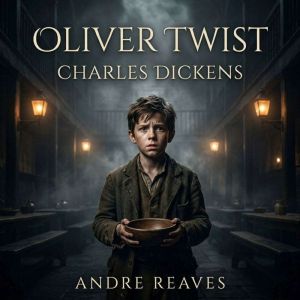
Oliver Twist
A Masterpiece of Classic Literature: The Timeless Tale of a Destitute Orphan Who Dared to Ask for More and Survived the Dark Underworld of Victorian London.
Author: Charles Dickens
Narrator: Andre Reaves
Unabridged: 16 hr 31 min
Format: Digital Audiobook Download
Publisher: Andre Reaves
Published: 03/27/2026
Categories: Fiction, Classic, Historical Fiction, Coming Of Age
Synopsis
"Please, sir, I want some more." With these seven defiant words, a starving orphan ignited a revolution that would echo through literary history.
Born into the bleak, unforgiving walls of a parish workhouse, young Oliver Twist is thrust into a world that demands absolute submission. Beaten, starved, and sold into the grueling labor of a coffin-maker's apprentice, Oliver finally escapes the only misery he has ever known. But the fog-choked streets of nineteenth-century London offer little sanctuary for a penniless boy. Stumbling into the clutches of the cunning Artful Dodger and the sinister criminal mastermind Fagin, Oliver finds himself caught in a dangerous underworld of thieves, pickpockets, and ruthless villains. To survive, he must navigate a treacherous web of crime and corruption without losing his innocent soul, while a dark conspiracy regarding his true identity threatens to consume his future.
Why you will love this audiobook:
Fans of Classic Literature and gripping historical fiction will be completely captivated by this brilliant blend of dark social satire, gothic atmosphere, and intense coming-of-age drama. You'll be transported directly into the cobblestone alleys of Victorian England, mesmerized by unforgettable character archetypes, harrowing stakes, and a profound underdog narrative that explores the enduring resilience of the human spirit against crushing poverty and greed.
About the Author:
Charles Dickens (1812–1870) stands as one of the greatest novelists of the Victorian era, renowned for his razor-sharp social commentary, unforgettable characters, and mastery of the serialized novel. Through his prolific and passionate storytelling, Dickens championed the poor and oppressed, leaving an indelible mark on world literature and social reform.
Born into the bleak, unforgiving walls of a parish workhouse, young Oliver Twist is thrust into a world that demands absolute submission. Beaten, starved, and sold into the grueling labor of a coffin-maker's apprentice, Oliver finally escapes the only misery he has ever known. But the fog-choked streets of nineteenth-century London offer little sanctuary for a penniless boy. Stumbling into the clutches of the cunning Artful Dodger and the sinister criminal mastermind Fagin, Oliver finds himself caught in a dangerous underworld of thieves, pickpockets, and ruthless villains. To survive, he must navigate a treacherous web of crime and corruption without losing his innocent soul, while a dark conspiracy regarding his true identity threatens to consume his future.
Why you will love this audiobook:
Fans of Classic Literature and gripping historical fiction will be completely captivated by this brilliant blend of dark social satire, gothic atmosphere, and intense coming-of-age drama. You'll be transported directly into the cobblestone alleys of Victorian England, mesmerized by unforgettable character archetypes, harrowing stakes, and a profound underdog narrative that explores the enduring resilience of the human spirit against crushing poverty and greed.
About the Author:
Charles Dickens (1812–1870) stands as one of the greatest novelists of the Victorian era, renowned for his razor-sharp social commentary, unforgettable characters, and mastery of the serialized novel. Through his prolific and passionate storytelling, Dickens championed the poor and oppressed, leaving an indelible mark on world literature and social reform.