List: $10.99
| Sale: $7.70
Club: $5.49
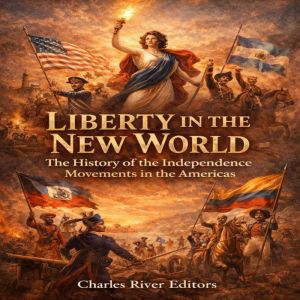
Liberty in the New World: The History of the Independence Movements in the Americas
Author: Charles River Editors
Narrator: Michelle Humphries
Unabridged: 11 hr 8 min
Format: Digital Audiobook Download
Publisher: Charles River Editors
Published: 05/17/2026
Synopsis
Hispaniola entered the European record in 1492 when Christopher Columbus made landfall on its southern shore during his first trans-Atlantic voyage, and he named his discovery in honor of the Spanish Crown that had funded and sponsored the voyage. Leaving the crew of the wrecked Santa Maria on the island, he returned to Europe, leaving his men to establish the foundations of the settlement of La Navidad and the first beachhead of the European seizure of the Caribbean and the New World. Columbus would revisit the island three times, leading a vanguard of pioneer colonists to commence the exploitation of the New World. Thus, even by the 16th century, slaves were being imported to Hispaniola, and over the next few centuries, the population of African slaves came to represent a sizable majority of the population there. This would set the stage for one of history’s most unique revolutions. The American Revolution is replete with seminal moments that every American learns in school, from the “shot heard ‘round the world” to the Declaration of Independence, but the events that led up to the fighting at Lexington & Concord were borne out of 10 years of division between the British and their American colonies over everything from colonial representation in governments to taxation, the nature of searches, and the quartering of British regulars in private houses. From 1764-1775, a chain of events that included lightning rods like the Townshend Acts led to bloodshed in the form of the Boston Massacre, while the Boston Tea Party became a symbol of nonviolent protest. By in the early 19th century, events transpiring back in Europe would make it possible for independence movements to spread across the New World, especially as the Spanish Empire teetered, and those events would make it possible for leaders like Simón Bolívar to become the liberators across the Americas, reshaping the Western hemisphere in ways it still resembles today.