List: $17.99
| Sale: $12.59
Club: $8.99
Hojoki: A Buddhist Reflection on Solitude
Imperfection and Transcendence - Bilingual English and Japanese Texts
Author: Kamo no Chomei Translated by Matthew Stavros
Narrator: Nishii
Unabridged: 1 hr 44 min
Format: Digital Audiobook Download
Publisher: Tuttle Publishing
Published: 05/07/2024
Categories: Fiction, Poetry, Haiku, Nonfiction, Religion, Buddhism, Zen, Philosophy
Includes:
Bonus Material

Synopsis
Discover the tranquil wisdom of Chomei's 13th-century masterpiece, Hojoki, as it unveils the beauty of imperfection and the serenity of a simple life amidst the chaos of existence.
Hojoki is an introspective poem written in the 13th century by the enigmatic Japanese hermit Kamo no Chomei, who as a young man served in the capital as official court poet but later in life withdrew from society.
Composed in a time of devastating fires, floods, earthquakes, droughts and famines, Chomei's masterpiece reflects on the impermanence of things, expressing life's mysterious beauty and the profound wisdom to be found in nature.
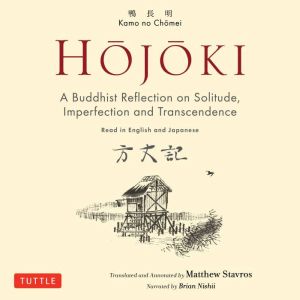
Chomei paints a vivid picture of the chaos and suffering of the human condition. Amidst this turmoil, he discovers an oasis of calm in a simple mountain hut, where he contemplates the virtues of nature and the wabi sabi beauty of imperfection in all things.
In their friends,
People like to find affluence and a ready smile.
Compassion and honesty,
Not so much.
So why not make friends with music and nature instead:
The moon; the flowers?
********
I know my needs,
And I know the world.
I want for nothing,
And do not labor to acquire things.
Quietude is all I desire:
To be free from worry is happiness enough.
This new translation by Matthew Stavros, presented along with the original Classical Japanese, captures the profound serenity of Chomei's writings. His poignant verses serve as timely reminders that amidst the uncertainty of this world, true contentment can often be found in the simple life, in embracing fleeting moments, and in seeking solace in nature's beauty.
Hojoki is an introspective poem written in the 13th century by the enigmatic Japanese hermit Kamo no Chomei, who as a young man served in the capital as official court poet but later in life withdrew from society.
Composed in a time of devastating fires, floods, earthquakes, droughts and famines, Chomei's masterpiece reflects on the impermanence of things, expressing life's mysterious beauty and the profound wisdom to be found in nature.
Chomei paints a vivid picture of the chaos and suffering of the human condition. Amidst this turmoil, he discovers an oasis of calm in a simple mountain hut, where he contemplates the virtues of nature and the wabi sabi beauty of imperfection in all things.
In their friends,
People like to find affluence and a ready smile.
Compassion and honesty,
Not so much.
So why not make friends with music and nature instead:
The moon; the flowers?
********
I know my needs,
And I know the world.
I want for nothing,
And do not labor to acquire things.
Quietude is all I desire:
To be free from worry is happiness enough.
This new translation by Matthew Stavros, presented along with the original Classical Japanese, captures the profound serenity of Chomei's writings. His poignant verses serve as timely reminders that amidst the uncertainty of this world, true contentment can often be found in the simple life, in embracing fleeting moments, and in seeking solace in nature's beauty.

