About Jonathan Swift
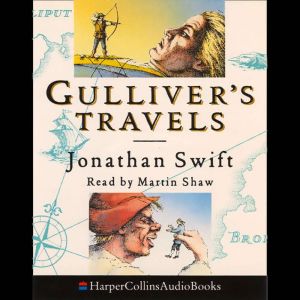
Jonathan Swift, an Irish author and journalist, is considered to have been the foremost prose satirist in the English language. Swift became insane in his last years, but until his death he was known as Dublin's foremost citizen. Swift's most famous work is Gulliver's Travels, where the stories of Gulliver's experiences among dwarfs and giants had such an air of authenticity and realism that many contemporary readers believed them to be true.
Swift was born in 1667 in Dublin, Ireland. His father died seven months before his son was born, and his mother had no private income to support her family. Swift was taken to England by his nurse, and at the age of four he was sent back to Ireland. Swift's mother returned to England, and she left her son to her wealthy brother-in-law, Uncle Godwin.
Swift studied at Trinity College in Dublin, where he earned a master's degree, even though he was not a very good student. When the anti-Catholic Revolution of 1688 aroused reaction in Ireland, Swift moved to England to the household of Sir William Temple at Moor Park, Surrey. He worked there as a secretary but did not like his position as a servant in the household. In 1695, Swift was ordained in the Church of Ireland (Anglican), Dublin.
After Temple's death in 1699, Swift returned to Ireland. He made several trips to London and gained fame with his essays. Throughout the reign of Queen Anne, Swift was one of the central characters in the literary and political life of London. From 1695 to 1696, Swift was the vicar of Kilroot. Between the years 1707 and 1709, Swift was an emissary for the Irish clergy in London, during which time he contributed to the "Bickerstaff Papers" and to the Tattler.
From 1713 to 1742, Swift was the dean of St. Patrick's Cathedral. It is thought that Swift suffered from Alzheimer's disease. Many considered him insane-however, from the beginning of his twentieth year, he suffered from deafness. Swift predicted his mental decay when he was about fifty. He died in Dublin on October 19, 1745, leaving behind a great mass of poetry and prose, chiefly in the form of pamphlets.
In addition to Gulliver's Travels, Swift's most famous works include The Battle of the Books, which explores the merits of the ancients and the moderns in literature; A Tale of a Tub, a religious satire;
Arguments Against Abolishing Christianity, an argument for the preservation of the Christian religion as a social necessity; Drapier's Letters; and A Modest Proposal.