List: $14.99
| Sale: $10.50
Club: $7.49
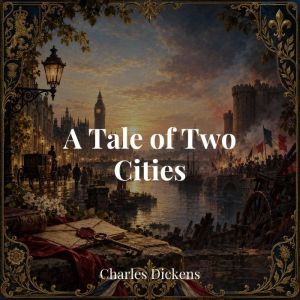
A Tale of Two Cities
Author: Charles Dickens
Narrator: AI Voice Bob
Unabridged: 16 hr 20 min
Format: Digital Audiobook Download
Publisher: Mika
Published: 10/02/2026
Categories: Fiction, Classic, Historical Fiction, Mystery & Detective
Synopsis
This audiobook is narrated by an AI Voice.
What if the darkest hour of history could reveal the highest form of love?
In *A Tale of Two Cities*, Charles Dickens creates one of his most dramatic and unforgettable novels: a story of London and Paris, secrecy and revolution, vengeance and mercy, despair and resurrection. First published in 1859, the novel unfolds before and during the French Revolution, when private lives are swept into the violence of history.
At the heart of the story are Dr. Manette, released from long imprisonment; Lucie Manette, whose compassion becomes a force of restoration; Charles Darnay, a man trying to escape the sins of his lineage; and Sydney Carton, whose wasted life hides the possibility of extraordinary redemption. Around them, Dickens builds a world of courts, prisons, coded messages, aristocratic cruelty, revolutionary fury, and moral transformation.
The power of *A Tale of Two Cities* lies in its contrast: two cities, two men, two destinies, and two visions of justice. Dickens exposes both the brutality of oppression and the danger of vengeance when suffering becomes hatred. Yet within the storm, he creates one of literature’s most moving portraits of self-sacrifice.
This AI-narrated audiobook offers a clear, polished, and immersive listening experience, bringing Dickens’s suspense, irony, tenderness, and historical grandeur to life with vivid clarity.
Enter the age of revolution, follow the secret thread from London to Paris, and discover the classic where love, memory, and sacrifice become stronger than terror.