List: $18.99
| Sale: $13.29
Club: $9.49
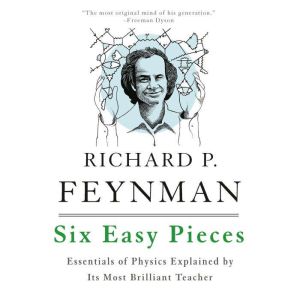
Six Easy Pieces
Essentials of Physics Explained by Its Most Brilliant Teacher
Author: Richard P. Feynman
Narrator: Richard P. Feynman
Unabridged: 5 hr 21 min
Format: Digital Audiobook Download
Publisher: Basic Books
Published: 07/15/2025
Categories: Nonfiction, Science, Physics, Mathematics
Synopsis
Learn how to think like a physicist from a Nobel laureate and "one of the greatest minds of the twentieth century" (New York Review of Books) with these six classic and beloved lessons
It was Richard Feynman's outrageous and scintillating method of teaching that earned him legendary status among students and professors of physics. From 1961 to 1963, Feynman delivered a series of lectures at the California Institute of Technology that revolutionized the teaching of physics around the world. Six Easy Pieces, taken from these famous Lectures on Physics, represent the most accessible material from the series. In these classic lessons, Feynman introduces the general reader to the following topics: atoms, basic physics, energy, gravitation, quantum mechanics, and the relationship of physics to other topics. With his dazzling and inimitable wit, Feynman presents each discussion with a minimum of jargon. Filled with wonderful examples, Six Easy Pieces is the ideal introduction to the fundamentals of physics by one of the most admired and accessible physicists of modern times. "If one book was all that could be passed on to the next generation of scientists it would undoubtedly have to be Six Easy Pieces."- John Gribbin, New Scientist
It was Richard Feynman's outrageous and scintillating method of teaching that earned him legendary status among students and professors of physics. From 1961 to 1963, Feynman delivered a series of lectures at the California Institute of Technology that revolutionized the teaching of physics around the world. Six Easy Pieces, taken from these famous Lectures on Physics, represent the most accessible material from the series. In these classic lessons, Feynman introduces the general reader to the following topics: atoms, basic physics, energy, gravitation, quantum mechanics, and the relationship of physics to other topics. With his dazzling and inimitable wit, Feynman presents each discussion with a minimum of jargon. Filled with wonderful examples, Six Easy Pieces is the ideal introduction to the fundamentals of physics by one of the most admired and accessible physicists of modern times. "If one book was all that could be passed on to the next generation of scientists it would undoubtedly have to be Six Easy Pieces."- John Gribbin, New Scientist


