104 Rating(s)
List: $24.95
| Sale: $17.47
Club: $12.47
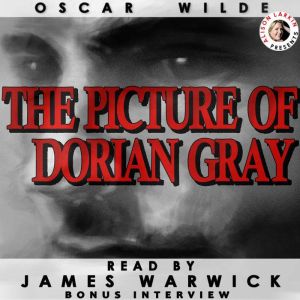
The Picture of Dorian Gray
Author: Oscar Wilde
Narrator: James Warwick
Unabridged: 9 hr 59 min
Format: Digital Audiobook Download
Publisher: Alison Larkin Presents
Published: 01/11/2019
Synopsis
This powerful new recording of Wilde’s famous novel tells the unforgettable story of a hedonistic young man who makes a sinister deal to preserve his youth. When his wish is granted, Dorian Gray slips into a life of sensuality, debauchery, and murder.
In this uncensored version, TV star James Warwick’s inspired, nuanced narration is followed by a fascinating conversation. The actor talks candidly with Alison Larkin about Oscar Wilde and Warwick's own challenges as a gay actor living in London at a time when homosexuality was illegal.
Oscar Wilde (1854-1900) was an Irish poet and playwright who is celebrated still for his sharp wit, flamboyant style, and sparkling conversation.
"Listeners will be enchanted by James Warwick's narration of Oscar Wilde's famous and controversial novel.
The story involves a man named Dorian Gray who has been corrupted by his youth and physical beauty.
Several productions of this classic have already been produced, but Warwick's performance is simply arresting.
He narrates in a strong voice with an elegant cadence and vocal color that befits each character and the overall tone of the work.
Any hint of monotony in the middle can be attributed to slow moments in Wilde's writing. Overall, Warwick's performance is smooth and melodic.
The audiobook also comes with an interview with Warwick in which he recounts his own life as a gay man in 1960s London.
A.C. Winner of AudioFile Earphones Award © AudioFile 2019, Portland, Maine [Published: MARCH 2019] Best, Dan "
In this uncensored version, TV star James Warwick’s inspired, nuanced narration is followed by a fascinating conversation. The actor talks candidly with Alison Larkin about Oscar Wilde and Warwick's own challenges as a gay actor living in London at a time when homosexuality was illegal.
Oscar Wilde (1854-1900) was an Irish poet and playwright who is celebrated still for his sharp wit, flamboyant style, and sparkling conversation.
"Listeners will be enchanted by James Warwick's narration of Oscar Wilde's famous and controversial novel.
The story involves a man named Dorian Gray who has been corrupted by his youth and physical beauty.
Several productions of this classic have already been produced, but Warwick's performance is simply arresting.
He narrates in a strong voice with an elegant cadence and vocal color that befits each character and the overall tone of the work.
Any hint of monotony in the middle can be attributed to slow moments in Wilde's writing. Overall, Warwick's performance is smooth and melodic.
The audiobook also comes with an interview with Warwick in which he recounts his own life as a gay man in 1960s London.
A.C. Winner of AudioFile Earphones Award © AudioFile 2019, Portland, Maine [Published: MARCH 2019] Best, Dan "

