List: $6.99
| Sale: $4.90
Club: $3.49
The Kreutzer Sonata
Author: Leo Tolstoy
Series: The Leo Tolstoy Library
Narrator: AI Voice F. Hearts
Unabridged: 3 hr 50 min
Format: Digital Audiobook Download
Publisher: Sonictale Studios
Published: 10/22/2026
Categories: Fiction, World Literature
Synopsis
This audiobook is narrated by an AI Voice.
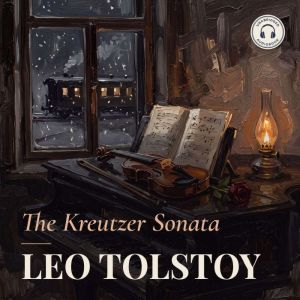
On a long night train across Russia, passengers fall into an argument about marriage, love and divorce. One of them, a nervous, grey-haired man named Pozdnyshev, has been listening in silence. At last he speaks: he is the man who killed his wife. Through the rest of the night he tells a stranger how it happened.
His confession moves from the dissipation of his youth to a marriage built, he now believes, on nothing but sensuality; to years of quarrels, jealousy and exhausted reconciliation; and to the evening his wife played Beethoven's Kreutzer Sonata with a charming violinist — music that, in his telling, unleashed everything that followed. Pozdnyshev is by turns lucid, bitter and unbearably honest about himself, and Tolstoy lets him argue his extreme case to the end.
Published in 1889, The Kreutzer Sonata was banned by the Russian censor and caused a scandal across Europe. It remains one of his most intense and disturbing works, as gripping as a thriller. This new translation presents the novella complete.