List: $20.99
| Sale: $14.70
Club: $10.49
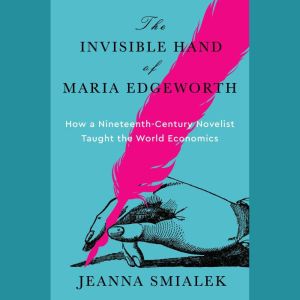
The Invisible Hand of Maria Edgeworth
How a Nineteenth-Century Novelist Taught the World Economics
Author: Jeanna Smialek
Narrator: Barrie Kreinik, Jeanna Smialek
Unabridged: 7 hr 11 min
Format: Digital Audiobook Download
Publisher: Random House Audio
Published: 10/06/2026
Categories: Nonfiction, Business & Economics, History, Modern History
Synopsis
The untold story of the nineteenth-century novelist who outearned Jane Austen and wove provocative theories into her fiction—changing economics forever
“Smialek, with the analytical rigor and narrative drive that made her one of the finest economics journalists of her generation, has rescued Maria Edgeworth from a historical amnesia that was, as this book makes clear, far from accidental.” —Janet Yellen, Former Chair of the Federal Reserve and United States Secretary of the Treasury
At the end of the eighteenth century, Europe faced revolutions, famine, and war. It was out of this chaos that the field of economics was born—and while that founding has for centuries been attributed almost entirely to men, they were only part of the story.
Maria Edgeworth, known to her contemporaries as “the Great Maria,” was one of the most important authors of the Regency era, envied by Lord Byron, admired by Jane Austen, and read avidly by the British royalty. But she was more than just a novelist and a society fixture: She was also a covert economist, working just after Adam Smith and alongside her friends David Ricardo and Thomas Malthus. As the earliest economists established their philosophies on production and investment, Edgeworth published dozens of stories, many with lessons on finance, society, and trade tucked into their plots. Through her fiction, Edgeworth delivered new ideas to a broader public, stretching the boundaries of what a woman of her time could achieve and captivating an empire in the process.
Here, her tale is told alongside those of the men—and women—who invented a field that would reshape our world. Lively and original, The Invisible Hand of Maria Edgeworth brings this astonishing woman and her world vividly to life and rewrites the origin story of modern economics.