List: $17.99
| Sale: $12.59
Club: $8.99
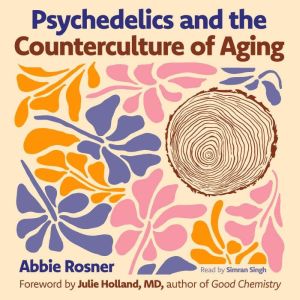
Psychedelics and the Counterculture of Aging
Author: Abbie Rosner, Julie Holland
Narrator: Simran Singh
Unabridged: 6 hr 9 min
Format: Digital Audiobook Download
Publisher: Simon & Schuster/ Inner Traditions
Published: 07/07/2026
Categories: Nonfiction, Self-help, Aging, Health & Fitness
Includes:
Bonus Material

Synopsis
• Details the best practices for safe and meaningful journeying in one’s later years
• Shares accounts of older adults finding healing, spiritual deepening, joyous intimacy, and peace with mortality through intentional psychedelic journeying
• Describes how group psychedelic ceremonies can promote communities of mutual support that are essential for thriving in older life
Baby boomers are once again exploring the psychedelic drugs of their youth, but this time to enhance their experience of aging. In this book, Abbie Rosner does a deep dive into what psychedelics can offer us in our later years and their risks and benefits for older adults.
Rosner describes pivotal advances in clinical research on psychedelic medicines and scientifically validated best practices to prevent “bad trips.” She also considers the legal and underground avenues that older adults are exploring to access these experiences and the available supports for safe journeying.
In compelling personal stories, more than 30 older psychonauts share how their psychedelic experiences helped them heal old wounds, align with their authentic selves, experience profound love and forgiveness, and make peace with their mortality. Many describe how psychedelic journeying has made their older years the happiest, most meaningful time of their lives.
Beyond sharing individual stories of expansion and transformation, Rosner shows that these pioneering psychedelic elders are helping us reimagine what older age looks and feels like in our ageist, death-phobic culture. Her work illuminates the evolution—and revolution—of the role of elders in our society.
• Shares accounts of older adults finding healing, spiritual deepening, joyous intimacy, and peace with mortality through intentional psychedelic journeying
• Describes how group psychedelic ceremonies can promote communities of mutual support that are essential for thriving in older life
Baby boomers are once again exploring the psychedelic drugs of their youth, but this time to enhance their experience of aging. In this book, Abbie Rosner does a deep dive into what psychedelics can offer us in our later years and their risks and benefits for older adults.
Rosner describes pivotal advances in clinical research on psychedelic medicines and scientifically validated best practices to prevent “bad trips.” She also considers the legal and underground avenues that older adults are exploring to access these experiences and the available supports for safe journeying.
In compelling personal stories, more than 30 older psychonauts share how their psychedelic experiences helped them heal old wounds, align with their authentic selves, experience profound love and forgiveness, and make peace with their mortality. Many describe how psychedelic journeying has made their older years the happiest, most meaningful time of their lives.
Beyond sharing individual stories of expansion and transformation, Rosner shows that these pioneering psychedelic elders are helping us reimagine what older age looks and feels like in our ageist, death-phobic culture. Her work illuminates the evolution—and revolution—of the role of elders in our society.