List: $9.99
| Sale: $7.00
Club: $4.99
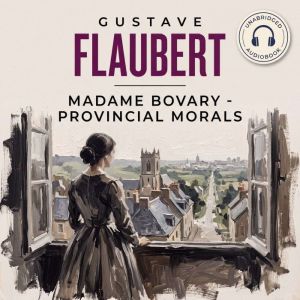
Madame Bovary
Provincial Morals
Author: Gustave Flaubert
Series: The Gustave Flaubert Library
Narrator: AI Voice F. Hearts
Unabridged: 13 hr 53 min
Format: Digital Audiobook Download
Publisher: Sonictale Studios
Published: 10/01/2026
Categories: Fiction, World Literature
Synopsis
This audiobook is narrated by an AI Voice.
Charles Bovary is the awkward new boy in class who grows up to become a modest officer of health and sets up practice in the Norman village of Tostes. Called out one night to set the broken leg of a prosperous farmer, Monsieur Rouault, he meets the farmer's daughter Emma, who was educated in a convent and has filled her head with novels and dreams of passion and elegance. He marries her. She had hoped that marriage would feel like the books she loved. It does not.
A single invitation to a ball at the château of La Vaubyessard gives Emma a glimpse of the life she believes she was made for, and afterward provincial life becomes unbearable. Charles moves them to the market town of Yonville-l'Abbaye, where the self-important pharmacist Homais holds forth, the obliging cloth merchant Lheureux is always ready with credit, a young clerk named Léon shares her love of poetry, and a landowner, Rodolphe Boulanger, takes a close interest in the restless doctor's wife.
Madame Bovary was first serialized in 1856 and put on trial for offending public morals before it appeared as a book in 1857. With its exact, unsparing prose and its portrait of a woman caught between longing and reality, it changed the novel forever. This new translation presents the complete novel, read in full.
Charles Bovary is the awkward new boy in class who grows up to become a modest officer of health and sets up practice in the Norman village of Tostes. Called out one night to set the broken leg of a prosperous farmer, Monsieur Rouault, he meets the farmer's daughter Emma, who was educated in a convent and has filled her head with novels and dreams of passion and elegance. He marries her. She had hoped that marriage would feel like the books she loved. It does not.
A single invitation to a ball at the château of La Vaubyessard gives Emma a glimpse of the life she believes she was made for, and afterward provincial life becomes unbearable. Charles moves them to the market town of Yonville-l'Abbaye, where the self-important pharmacist Homais holds forth, the obliging cloth merchant Lheureux is always ready with credit, a young clerk named Léon shares her love of poetry, and a landowner, Rodolphe Boulanger, takes a close interest in the restless doctor's wife.
Madame Bovary was first serialized in 1856 and put on trial for offending public morals before it appeared as a book in 1857. With its exact, unsparing prose and its portrait of a woman caught between longing and reality, it changed the novel forever. This new translation presents the complete novel, read in full.