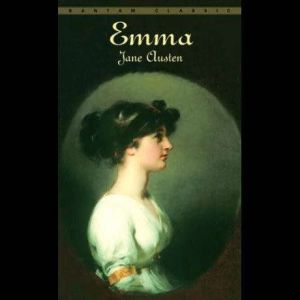
Emma, Jane Austen
Emma, Jane Austen
22 Rating(s)
$0.00

Emma

Author: Jane Austen

Narrator: Unknown

Unabridged: 9 hr 48 min

Format: Digital Audiobook Download

Published: Not Available

Categories: Fiction, Classic


Synopsis

A comedy of manners, Emma portrays the spoilt, snobbish, yet charming Emma Woodhouse as she delightfully interferes in the relationships of others without taking much notice of her own heart. Although quick to make prejudgments and decisions, Emma is eventually able to notice her mistakes, and it is this revelation that makes her an endearing heroine and an inspiration to women throughout. Austen has not only created, but also brought to life the world inhabited by her characters through her vivid depictions and clever use of wit. The novel begins with the introduction of the twenty-year-old protagonist described by the all-knowing narrator as Emma Woodhouse, handsome, clever, and rich with a comfortable home and happy disposition. He also warns readers of Emmas high self-confidence and her efforts of having everything her way. Living on the large estate of Hartfield in Surrey with her elderly widowed father, Emma is satisfied with her life and sees no need for romance or a marriage of her own. Instead she views herself to be quite the matchmaker after attending the wedding of her former governess and best friend Anne Taylor and Mr. Weston, whom she has introduced to one another. This new role as matchmaker is further inflamed when she befriends the sweet but not so bright seventeen-year-old Harriet Smith. Emma is determined to find a suitable match for her new best friend and believes that Harriet deserves a gentleman and nothing less. A trusted friend and brother-in-law, George Knightley appears to be the only person openly criticizing Emmas actions and pointing out her faults. As the novel progresses so does the positive transformation of Emma as she evolves from her self-centered ways into a sympathetic woman well aware of others and her own desires. Emma is often labeled as Austens most flawless piece of work, as she explores social issues concerning the difficulties women face living in a society and time when social status defined their very existence. A classic depiction of youthful pride and a misinterpretation of signs, Emma is not without reason celebrated as one of the most revered social comedies.

About Jane Austen

Jane Austen was born on December 16, 1775, to the Reverend George Austen and his wife, Cassandra Leigh Austen, in the village of Steventon in Hampshire, England. Though her mother was from a family of gentry, Jane's father was not well off, and the large family had to take in school boarders to make ends meet. The second youngest of the Austens' eight children, Jane was very close to her elder, and only, sister, Cassandra, and neither sister ever married. Both girls were educated at home, as many were at that time.

From a young age Jane wrote satires and read them aloud to her appreciative family. Though she completed the manuscripts of two full-length novels while living at Steventon, these were not published. Later, these novels were revised into the form under which they were published, as Sense and Sensibility and Pride and Prejudice, respectively.

In 1801, George Austen retired from the clergy, and Jane, Cassandra, and their parents took up residence in Bath, a fashionable town Jane liked far less than her native village. Jane seems to have written little during this period. When Mr. Austen died in 1805, the three women, Mrs. Austen and her daughters, moved first to Southampton and then, partly subsidized by Jane's brothers, occupied a house in Chawton, a village not unlike Jane's first home. There she began to work on writing and pursued publishing once more, leading to the anonymous publication of Sense and Sensibility in 1811 and Pride and Prejudice in 1813, to modestly good reviews.

Known for her cheerful, modest, and witty character, Jane Austen had a busy family and social life but very little direct romantic experience. Her last years were quiet and devoted to family, friends, and writing her final novels. In 1817 she had to interrupt work on her last and unfinished novel, Sanditon, because she fell ill. She died on July 18, 1817, in Winchester, where she had been taken for medical treatment. After her death, her novels Northanger Abbey and Persuasion were published, together with a biographical notice, due to the efforts of her brother Henry. Austen is buried in Winchester Cathedral.


Reviews

There are currently no user reviews for this audiobook.