List: $18.99
| Sale: $13.29
Club: $9.49
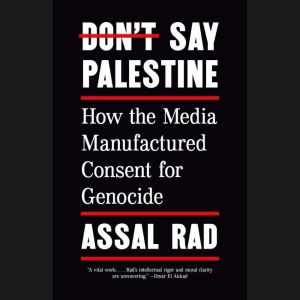
Don't Say Palestine
How the Media Manufactured Consent for Genocide
Author: Assal Rad
Narrator: Assal Rad
Unabridged: 6 hr 11 min
Format: Digital Audiobook Download
Publisher: Random House Audio
Published: 09/08/2026
Categories: Nonfiction, Political Science, Censorship, World Politics
Synopsis
A searing indictment of Western media that lays bare how the "free press," long tasked with speaking truth to power, instead became a vital part of the machinery that enabled the genocide in Palestine
"In this important new work of media criticism, Rad dissects the biases, distortions, and falsehoods by which press institutions conceal the atrocities of empire—as well as delivering a powerful call for accountability, justice, and truth." —Molly Crabapple, author of Here Where We Live Is Our Country
If you’re not writing the truth about crimes against humanity, you’re culpable in them.
Activist and Middle East historian Assal Rad is known as the “headline fixer” for her powerful posts that illustrate how mainstream Western media’s coverage of the Gaza Genocide is filled with double standards. Israelis are described as "children" and "civilians," while Palestinians are "people under 18" and "collateral damage"; Israelis are killed; Palestinians die. Even in the wake of the so-called ceasefire, major Western media continually obfuscates Israeli violence in Palestine: For example, the Associated Press reported that "Gaza's living conditions worsen as strong winds and hypothermia kill 5." No, Rad corrects: Gaza's living conditions worsen as Israel blocks aid.
In Don’t Say Palestine, Rad reveals a pattern of dehumanizing language—in outlets from CNN and the AP to the BBC and The New York Times—so consistently employed throughout the Palestinian genocide that it amounts to a policy. Mainstream Western media consistently downplays Israeli responsibility, “others” Palestinians, and casts doubt on inviolable tenets of international law like the sanctity of hospitals and journalists in war zones. This groundbreaking, eye-opening exposé offers both a moral reckoning and an urgent call to action, mapping with devastating clarity the media’s complicity in whitewashing a human rights crisis.