List: $12.99
| Sale: $9.10
Club: $6.49
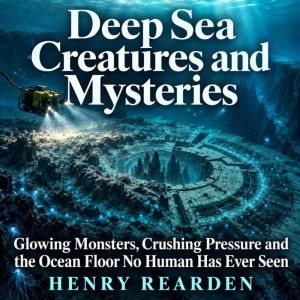
Deep Sea Creatures and Mysteries
Glowing Monsters, Crushing Pressure and the Ocean Floor No Human Has Ever Seen
Author: Henry Rearden
Narrator: AI Voice James
Unabridged: 2 hr 17 min
Format: Digital Audiobook Download
Publisher: Independently Published
Published: 10/04/2026
Categories: Nonfiction, Nature, Ecosystems & Habitats, Science, Earth Sciences, Life Sciences
Synopsis
This audiobook is narrated by an AI Voice.
The largest living space on Earth is a place almost no one has ever seen.
Below the reach of sunlight lies a world of permanent darkness, near-freezing cold and pressure that can crush a submarine in a fraction of a second. It covers most of the planet, yet humanity has looked at only a tiny sliver of its floor. The surface of Mars is better mapped. And every time a camera goes down, something unexpected comes back: animals that make their own light, sharks that may have been alive for four centuries, worms that feed on the heat of the planet, a snail that wears armour made of iron.
The strangest part is not what lives there. It is how close it is. The deep sea lies a few kilometres beneath ordinary shipping lanes, quietly absorbing heat and carbon, feeding the ocean above and holding the metals that modern batteries depend on. And for the first time in history, mining companies are preparing to dig into it before scientists understand what is down there.
From the sunlit surface to the bottom of the Mariana Trench, this is a journey through the last unexplored world on the planet:
• why most animals in the dark glow, and what bioluminescence is really for
• how the giant squid was finally filmed alive, after centuries of sea-monster legends
• how a pink snailfish thrives eight kilometres down, where the water would crush a submarine
• why the anglerfish, the vampire squid and the blobfish look the way they do
• what the Titanic and other wrecks reveal about time in the deep
• why seabed mining could leave scars still visible decades later
The deep sea is not the edge of the living world. It is most of it, and it is still almost entirely dark.
The largest living space on Earth is a place almost no one has ever seen.
Below the reach of sunlight lies a world of permanent darkness, near-freezing cold and pressure that can crush a submarine in a fraction of a second. It covers most of the planet, yet humanity has looked at only a tiny sliver of its floor. The surface of Mars is better mapped. And every time a camera goes down, something unexpected comes back: animals that make their own light, sharks that may have been alive for four centuries, worms that feed on the heat of the planet, a snail that wears armour made of iron.
The strangest part is not what lives there. It is how close it is. The deep sea lies a few kilometres beneath ordinary shipping lanes, quietly absorbing heat and carbon, feeding the ocean above and holding the metals that modern batteries depend on. And for the first time in history, mining companies are preparing to dig into it before scientists understand what is down there.
From the sunlit surface to the bottom of the Mariana Trench, this is a journey through the last unexplored world on the planet:
• why most animals in the dark glow, and what bioluminescence is really for
• how the giant squid was finally filmed alive, after centuries of sea-monster legends
• how a pink snailfish thrives eight kilometres down, where the water would crush a submarine
• why the anglerfish, the vampire squid and the blobfish look the way they do
• what the Titanic and other wrecks reveal about time in the deep
• why seabed mining could leave scars still visible decades later
The deep sea is not the edge of the living world. It is most of it, and it is still almost entirely dark.