List: $3.99
| Sale: $2.80
Club: $1.99
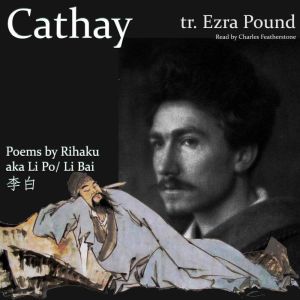
Cathay: Poems by Rihaku, aka Li Po/Li Bai (李白)
A Mistranslated Modernist Masterpiece
Author: Ezra Pound
Narrator: Charles Featherstone
Unabridged: 23 min
Format: Digital Audiobook Download
Publisher: Brimir & Blainn
Published: 05/13/2026
Categories: Fiction, Poetry, American Poetry, Asian Poetry, European Poetry
Synopsis
While working in London as secretary to WB Yeats, Ezra Pound by chance began a hotly controversial and widely influential book of translations from one of China’s great poets. Pound, who did not read Chinese, worked from the unfinished notes of Ernest Fenollosa, an American scholar of Japanese art. The volume draws heavily on the work of Rihaku (the Japanese name for Li Bai, 李白), the eighth-century Tang dynasty poet known for his themes of wandering, friendship, drinking, and the natural world.
From its first appearance, Cathay divided opinion. The collection influenced the direction of English-language modernist verse, but the distinguished translator Arthur Waley found Pound's versions of Li Bai's poetry so badly "not up to par" that he retranslated several of the poems as a direct rejoinder at the School of Oriental Studies in London.
Pound's defenders have argued that the poems succeed precisely because they break from the originals. Hugh Kenner says those who criticize Pound’s variations "miss the point", as he set out to produce innovative English poems using the ancient Chinese texts as "an inspirational springboard, not a constraining template", and Ford Madox Ford said they would make him the greatest poet of his day.
Michael Alexander states that many scholars consider them the best translations of Chinese to English poetry ever made, and Wenyan Guo argues that Pound's versions achieve "the greatest fidelity to poem translation," through the "intensity of the emotion and the preservation of the meeting point of poetics," reproducing the aesthetic significance of the original and achieving "unity with the soul of the original poem".
This book marks the transition from imagism to vorticism in Pound's work, written during dark days for both him and the world. So are they great poems, great translations, or both? We will never know, but either way they remain a rare glimpse of two of history’s greatest poets.
From its first appearance, Cathay divided opinion. The collection influenced the direction of English-language modernist verse, but the distinguished translator Arthur Waley found Pound's versions of Li Bai's poetry so badly "not up to par" that he retranslated several of the poems as a direct rejoinder at the School of Oriental Studies in London.
Pound's defenders have argued that the poems succeed precisely because they break from the originals. Hugh Kenner says those who criticize Pound’s variations "miss the point", as he set out to produce innovative English poems using the ancient Chinese texts as "an inspirational springboard, not a constraining template", and Ford Madox Ford said they would make him the greatest poet of his day.
Michael Alexander states that many scholars consider them the best translations of Chinese to English poetry ever made, and Wenyan Guo argues that Pound's versions achieve "the greatest fidelity to poem translation," through the "intensity of the emotion and the preservation of the meeting point of poetics," reproducing the aesthetic significance of the original and achieving "unity with the soul of the original poem".
This book marks the transition from imagism to vorticism in Pound's work, written during dark days for both him and the world. So are they great poems, great translations, or both? We will never know, but either way they remain a rare glimpse of two of history’s greatest poets.