List: $11.99
| Sale: $8.40
Club: $5.99
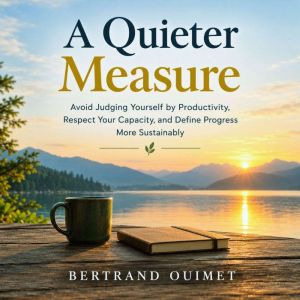
A Quieter Measure
Avoid Judging Yourself by Productivity, Respect Your Capacity, and Define Progress More Sustainably
Author: Bertrand Ouimet
Narrator: AI Voice Megan
Unabridged: 5 hr 31 min
Format: Digital Audiobook Download
Publisher: Independently Published
Published: 10/08/2026
Categories: Nonfiction, Self-help, Emotions, Personal Growth
Synopsis
This audiobook is narrated by an AI Voice.
What if the problem isn’t that you’re doing too little—but that you’ve learned to measure yourself by how much you get done?
A productive day can feel like proof that you’re doing well. A slower day can feel strangely personal. An unfinished list becomes a source of disappointment. Rest creates guilt. Someone else’s progress makes your own seem smaller. Even meaningful accomplishments can lose their satisfaction as soon as the next expectation appears.
Quieter Measure offers a different way to understand progress.
Rather than asking you to abandon ambition, lower every standard, or stop caring about meaningful work, this book explores how to separate your worth from your output and build a more sustainable relationship with achievement.
You’ll learn why capacity changes, why visible productivity tells only part of the story, and why maintenance, recovery, restraint, adaptation, and intentional stopping can all be genuine forms of progress.
Inside, you’ll explore how to:
Recognize when productivity has become a measure of personal worth
Respect changing capacity without abandoning responsibility
Notice important work and progress that traditional productivity measures overlook
Reduce guilt around rest, slower periods, and unfinished tasks
Stop comparing your real life with other people’s visible achievements
Define what “enough” means before effort expands without limit
Pursue ambition without relying on constant self-pressure
Build goals and routines that can survive ordinary life
Recognize maintenance, recovery, and thoughtful reduction as legitimate forms of progress
Create a personal definition of success that includes more than output
Quieter Measure is not an argument against discipline, achievement, or hard work. It is an invitation to measure them more accurately—to consider not only what you accomplish, but what your accomplishments cost, what they protect, and whether the pace can continue.