List: $9.99
| Sale: $7.00
Club: $4.99
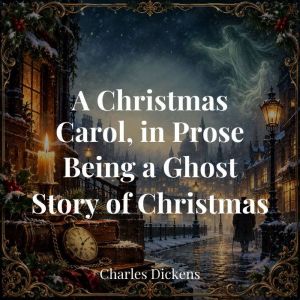
A Christmas Carol, in Prose Being a Ghost Story of Christmas
Author: Charles Dickens
Narrator: AI Voice Bob
Unabridged: 3 hr 30 min
Format: Digital Audiobook Download
Publisher: Mika
Published: 10/13/2026
Categories: Fiction, Classic, Fairy Tales & Legends, Ghost
Synopsis
This audiobook is narrated by an AI Voice.
What if one winter night could open the locked door of a human heart?
In *A Christmas Carol, in Prose: Being a Ghost Story of Christmas*, Charles Dickens creates one of the most beloved and enduring stories in English literature. First published in 1843, this Victorian classic follows Ebenezer Scrooge, a miserly man whose cold devotion to money is shattered by a supernatural visitation on Christmas Eve. Project Gutenberg identifies the work as an 1843 novella by Charles Dickens.
Through the ghost of Jacob Marley and the spirits of Christmas Past, Present, and Yet to Come, Scrooge is forced to confront memory, neglect, poverty, fear, death, and the possibility of mercy. Around him, Dickens evokes candlelit rooms, snowy streets, humble households, festive gatherings, and the moral contrast between isolation and human fellowship.
The story endures because it is more than a seasonal tale. It is a ghost story, a social vision, and a redemption drama in which the past can wound, the present can awaken, and the future can still be changed. Its images have shaped the modern imagination of Christmas, charity, conscience, and second chances.
This AI-narrated audiobook offers a clear, polished, and immersive listening experience, bringing Dickens’s warmth, irony, theatrical energy, supernatural atmosphere, and emotional force to life with clarity.
Step into the haunted Christmas night, walk beside Scrooge through shadow and revelation, and rediscover the classic that turned generosity into a miracle.