List: $8.99
| Sale: $6.30
Club: $4.49
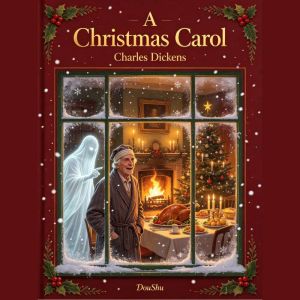
A Christmas Carol in Prose; Being a Ghost Story of Christmas
Author: Charles Dickens
Narrator: DouShu
Unabridged: 3 hr 6 min
Format: Digital Audiobook Download
Publisher: HongMei Zhou
Published: 04/21/2026
Categories: Fiction, Literary Fiction
Synopsis
A Christmas Carol is Charles Dickens' timeless tale of redemption, compassion, and the true spirit of the holiday season.
Ebenezer Scrooge is a miserly, cold-hearted old man who despises Christmas, dismissing it as "humbug." For years, he has hoarded every penny, exploited his loyal clerk Bob Cratchit, and turned his back on his only living relative, his cheerful nephew Fred.
On Christmas Eve, Scrooge is visited by the ghost of his dead business partner, Jacob Marley, who drags a heavy chain—the consequence of a lifetime of greed. Marley warns Scrooge that he will be visited by three spirits: the Ghost of Christmas Past, the Ghost of Christmas Present, and the Ghost of Christmas Yet to Come.
Over the course of one haunting night, Scrooge is forced to confront his past, witness the struggles of those around him, and face the grim future that awaits him if he does not change. He sees the poverty-stricken but joyful Cratchit family and their frail son Tiny Tim, who declares, "God bless us, every one!" He sees his own lonely grave, forgotten and unmourned.
Moved at last, Scrooge awakens on Christmas morning a changed man. He embraces the holiday with generosity and warmth, mending his relationships and becoming a second father to Tiny Tim.
Written in just six weeks in 1843, A Christmas Carol has become one of the most beloved stories in the English language. It popularized many of the traditions we now associate with Christmas—family gatherings, festive feasts, and the greeting "Merry Christmas" itself. Dickens was called "the father of Christmas" for its lasting impact.
This audiobook is based on the 1843 public domain text. Produced and narrated by Doushu, with AI assistance.
Ebenezer Scrooge is a miserly, cold-hearted old man who despises Christmas, dismissing it as "humbug." For years, he has hoarded every penny, exploited his loyal clerk Bob Cratchit, and turned his back on his only living relative, his cheerful nephew Fred.
On Christmas Eve, Scrooge is visited by the ghost of his dead business partner, Jacob Marley, who drags a heavy chain—the consequence of a lifetime of greed. Marley warns Scrooge that he will be visited by three spirits: the Ghost of Christmas Past, the Ghost of Christmas Present, and the Ghost of Christmas Yet to Come.
Over the course of one haunting night, Scrooge is forced to confront his past, witness the struggles of those around him, and face the grim future that awaits him if he does not change. He sees the poverty-stricken but joyful Cratchit family and their frail son Tiny Tim, who declares, "God bless us, every one!" He sees his own lonely grave, forgotten and unmourned.
Moved at last, Scrooge awakens on Christmas morning a changed man. He embraces the holiday with generosity and warmth, mending his relationships and becoming a second father to Tiny Tim.
Written in just six weeks in 1843, A Christmas Carol has become one of the most beloved stories in the English language. It popularized many of the traditions we now associate with Christmas—family gatherings, festive feasts, and the greeting "Merry Christmas" itself. Dickens was called "the father of Christmas" for its lasting impact.
This audiobook is based on the 1843 public domain text. Produced and narrated by Doushu, with AI assistance.